Branded-Generic: Companies, Wholesalers, and Chemists Looting Patients with the Lure of Medicine Discounts
-
Traders bleed poor, helpless patients by printing exorbitant prices on packings.
-
For the blood pressure medicine Biozosin 5XL, if a chemist sells it at the printed MRP, their total profit margin reaches a massive 1250%.
-
A medicine supplied at ₹22 (including the margins of the pharmaceutical company, wholesaler, and chemist) carries a Maximum Retail Price (MRP) of ₹301 printed on it.
-
While the Prime Minister is making efforts to provide affordable medicines to the public by starting Jan Aushadhi Kendras, pharma companies, wholesalers, and retailers are undermining these efforts.
(By Representative) Ahmedabad, Friday
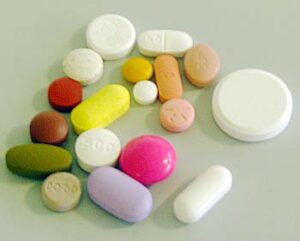
Due to the absolute lack of any formula to fix the prices of generic medicines, manufacturing companies, wholesalers, and chemists have formed a nexus to run a rampant loot by printing arbitrary retail prices. As a result, patients are being ripped off in the medicine market. Generally, companies manufacturing generic medicines calculate their production cost, add a 100% margin on top of all expenses, factor in a 10% margin for wholesalers and a 20% margin for retailers, and then print whatever Maximum Retail Price (MRP) they please. Even after offering a 50% to 75% discount on the printed retail price, patients are actually paying 50% to 200% more than the fair price. To make matters worse, chemists in Gujarat have now decided to completely stop offering these discounts, hatching a plot to thoroughly fleece the public.
In reality, even though this Maximum Retail Price supposedly includes the company’s production cost along with the 10% and 20% profit margins for wholesalers and retailers respectively, it stands 300% to 1000% higher than the rate at which it is supplied to the chemist. Despite this, four days ago, chemists across Gujarat and India announced a blanket ban on offering any discounts on medicines, paving a stronger road for profiteering. Vibrant Udyog has collected several bills to verify the ground reality.
According to a wholesaler’s bill from April 2026, a strip of Biozosin 5XL medicine, used for high blood pressure patients, is supplied to the chemist at ₹22 by bill—inclusive of GST and the margins for both the wholesaler and retailer. However, it will shock you to learn that the Maximum Retail Price printed on it is ₹301. Under these circumstances, following the chemists’ recent decision, if no rebate is given and it is sold strictly at the MRP, the retail chemist pockets a profit of ₹279 on it. This profit margin amounts to a staggering 1250%.
Similarly, a strip of Chymothal Forte, used to treat swelling and pain in any organ of the body, is supplied to the chemist at ₹42 for a strip of 10 tablets, which already includes the manufacturing company’s 100%, the wholesaler’s 10%, and the retailer’s 20% margins. Yet, the Maximum Retail Price printed on it is ₹458. Thus, a retail price higher by more than 900% is printed on it.
A pill used to regulate menstrual cycles is sold to the chemist at ₹11. This price already covers the company’s, wholesaler’s, and retailer’s profits of 100%, 10%, and 20% respectively. However, the printed MRP on it is ₹57, which is 400% higher than the supply rate. Similarly, a pack of four tablets used for sexual wellness is supplied to the chemist at ₹8, but carries a printed MRP of ₹80—a massive 900% inflation. Heart and cholesterol medicines are also being printed with MRPs that stack up a 500% to 700% profit margin.
Uncontrolled retail prices are printed on thousands of such medicines. Given this grim situation, it is absolutely necessary to frame a separate law to cap the maximum retail price based on profit margins. Currently, the printed MRP represents the final amount including taxes and profits, but there is absolutely no check or regulation on printing this amount. The public demands a law that strictly regulates the printing of such maximum retail prices.
Hemant Kosia, the Food and Drug Commissioner of Gujarat, had also recognized this reality during his tenure and advised the government to take strict measures to curb the rampant profiteering in generic medicines. He had prepared a detailed report on the matter. However, this report is believed to be buried somewhere deep within government files. This indicates that even the government seems to lack interest in taking a decision in public interest. On one hand, Prime Minister Narendra Modi is moving heaven and earth to provide affordable medicines to the masses through Jan Aushadhi Kendras, while on the other hand, pharma companies, wholesalers, and retailers are unashamedly looting the public. The poor patient is being crushed while companies reap wild profits.
[Box Item]
A Massive 1200% Gap Between Chemist Supply Price and Retail Selling Price
| Name of Medicine | Disease/Ailment | Chemist Supply Price | Printed Retail Price (MRP) | Excess Percentage Over Supply Price |
| Diclogesic Tablet | Painkiller | ₹9.00 | ₹58.73 | 450% |
| Zincet Tablet | Allergy | ₹4.00 | ₹19.73 | 450% |
| Pansped 40 Tablet | Acidity | ₹13.00 | ₹156.00 | 1100% |
| R Zol DSR Cap. | Digestive System | ₹17.50 | ₹159.82 | 800% |
| Tradez 100 Capsule | Fungal Infection | ₹45.00 | ₹178.08 | 300% |
| Sor Gel | Mouth Ulcers | ₹10.50 | ₹70.31 | 575% |
| Cadcal Joint Rose | Joint Pain | ₹44.00 | ₹328.00 | 625% |
| Cipcal 500 Tablet | Vitamin D-3 | ₹18.80 | ₹98.11 | 450% |
| Telistar AM | High Blood Pressure | ₹13.00 | ₹88.50 | 575% |
| Lopox Tablet | Diarrhea | ₹88.00 | ₹1150.00 | 1150% |
Differences Between Branded and Generic Medicines
-
Generic medicines can be up to 85% cheaper than branded medicines.
-
Manufacturing branded medicines initially requires expensive research and development, whereas generic medicines are created simply by copying an already established formula.
-
Due to trademark (legal) regulations, both differ in color, shape, size, and packaging.
-
Branded medicines utilize an attractive commercial brand name, while generic medicines are generally identified by their original chemical name.
-
The binders, fillers, and flavors used in the medicines can differ between the two.
-
The active ingredient, core element, or the actual healing chemical that cures the disease is absolutely identical in both branded and generic medicines.
-
The potency and strength of branded and generic drugs are exactly the same. The dosage remains identical in both.
-
Both branded and generic medicines must strictly comply with the same stringent quality control regulations set by the government.
-
Both branded and generic medicines work with the exact same speed and efficacy inside the body.
-
Branded medicines cost more because companies incur heavy expenditures on research and development to create them.
-
Generic medicines are manufactured after the expiry of the patent by analyzing its components, making them fundamentally cheaper than branded counterparts.