India Starts Manufacturing Flex-Fuel Vehicles to Save Forex Costs
Union Petroleum and Natural Gas Minister Hardeep Singh Puri announced on Friday that the ‘Flex Fuel’ variant, known as E85, will be approximately ₹20 cheaper per litre than E20 (ethanol-blended petrol). He stated that this is an environment-friendly step that will also increase farmers’ income.
What is E85?
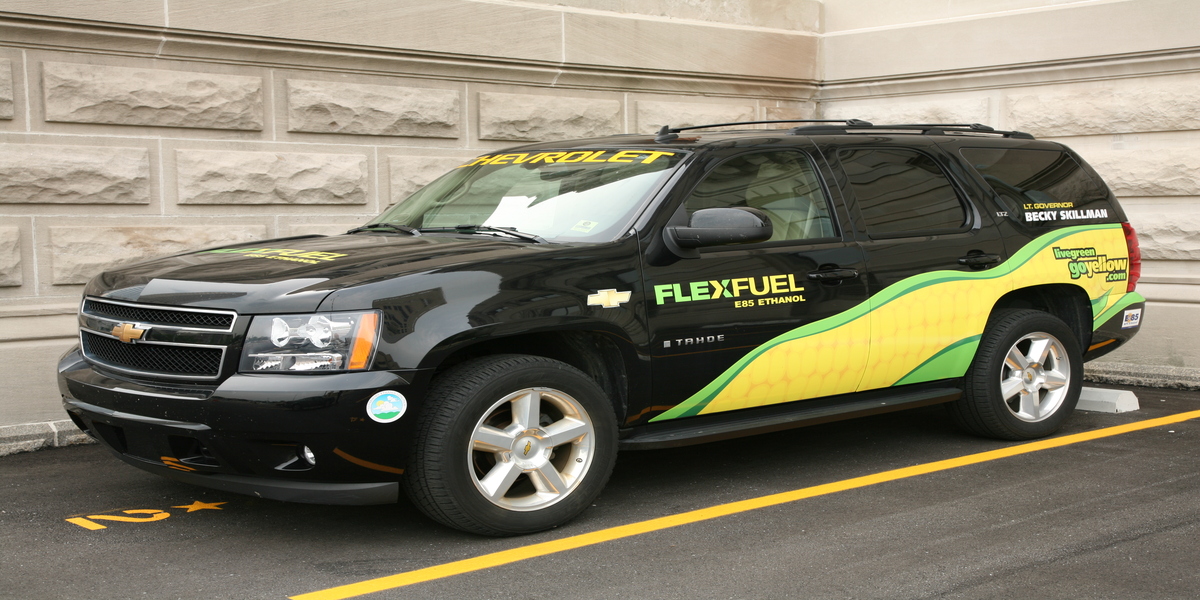
E85 is a blend of 80–85% ethanol and 14–19% petrol. This mixture is specifically designed for ‘Flex-Fuel Vehicles’ (FFV). Currently, the price of E20 petrol in Delhi is ₹102.12, while E85 is priced at ₹82.12 per litre. Initially, this fuel will be available at 48 state-owned Oil Marketing Company (OMC) outlets across the country. The target is to establish 500 dispensing stations by the end of 2026 and 5,000 by the end of 2027. Minister Hardeep Singh Puri clarified that E85 can only be used in compliant vehicles, for which special signage will be displayed at fuel stations. India is now moving towards achieving success similar to Brazil.
How is Flex Fuel made?
Flex fuel is a mixture of petrol and ethanol. Ethanol is a type of alcohol produced from sugarcane, maize, wheat, and agricultural waste through a process called ‘fermentation’. When we mix 20% ethanol with petrol, it is known as E20, and when we mix 85% ethanol with 15% petrol, it is known as E85.
How do Flex-Fuel vehicles operate?
Cars with ‘flex-fuel engines’ contain a sensor that detects the amount of petrol and ethanol in the tank and adjusts the engine accordingly. This reduces pollution and carbon emissions. Ethanol is cleaner than petrol; when ethanol-blended fuel burns, it releases less carbon monoxide, leading to less air pollution.
Double Benefit
With the arrival of flex-fuel engine cars in the market, it will become easier for farmers to dispose of crop residue. Typically, farmers burn stubble, which causes severe air pollution in North Indian cities, including Delhi, forcing schools to close for days. Now, ethanol can be produced from this agricultural waste. This prevents air pollution and turns waste into a useful product.
3. How does it reduce carbon emissions?
When sugarcane or maize plants grow, they absorb carbon dioxide ($CO_2$) from the atmosphere. When we use ethanol made from these crops in a car and it burns, the amount of $CO_2$ released is the same as what the plant had previously absorbed. In contrast, burning petrol releases carbon that has been trapped underground for millions of years, which heats up the atmosphere. Since we use products from nature’s cycle for ethanol, it causes far less damage to the environment compared to petrol. In short, by using flex fuel, we can reduce petrol imports, increase farmers’ income, and improve air quality.
Flex-Fuel Vehicle production has started in Gujarat
‘Flex-Fuel Vehicles’ (FFV) are now being manufactured in India. According to official data from the Ministry of Road Transport and Highways and the automobile industry, the production of flex-fuel vehicles has begun in India. As per the Government of India’s policy, all major automobile companies in the country have been advised to manufacture FFVs. Companies like Maruti Suzuki, Tata Motors, Toyota, and TVS have presented prototypes and models in India. Notably, Toyota’s ‘Kirloskar Motor’ has introduced India’s first Flex-Fuel Strong Hybrid Electric Vehicle (FFV-SHEV). The production plants for these vehicles are primarily located in automobile hubs like Gujarat, Pune, and Bengaluru.
Efficiency of Flex-Fuel Vehicles
The energy density of pure ethanol is about 30–35% lower than petrol. This means that if you use 100% ethanol, the car’s mileage may be slightly lower (approximately 15–20% less) compared to petrol. However, modern FFV engines have sensors that adjust the engine based on the blend, so there is no significant reduction in pickup or power.
Cost of Flex-Fuel Vehicles
Initially, the cost of an FFV may be ₹50,000 to ₹1,00,000 higher than a standard petrol car. This is because they require specialized fuel systems, corrosion-resistant materials, and ethanol sensors. However, once mass production begins, the price of these vehicles is expected to decrease.
Environmental Benefit
Reduction in carbon emissions due to Flex-Fuel Vehicles: Ethanol usage can reduce carbon emissions from vehicles by 25% to 30%. Toxic pollutants from vehicles will decrease. For example, it significantly reduces emissions of sulfur dioxide and other toxic elements, improving air quality in cities, as stated in the guidelines issued by the Ministry of Road Transport and Highways.
Do not invite risk
Standard vehicles currently in the market should not be used with E85 or E100 without modifications. Only vehicles that are ‘Flex-Fuel Compliant’ are safe for this fuel.
Electric Vehicle and Flex-Fuel Hybrid model will be created
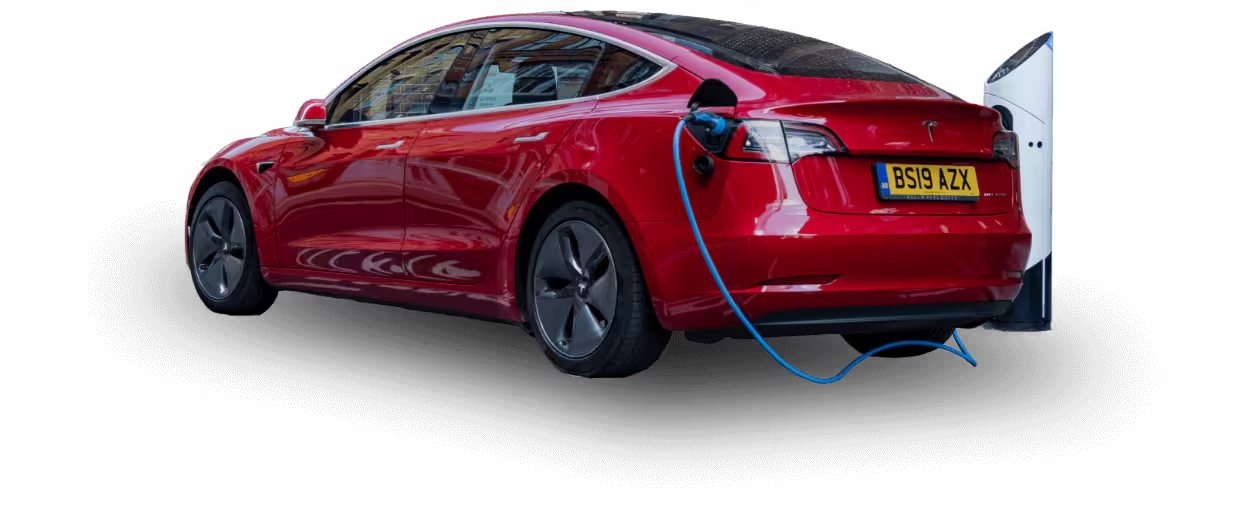
Yes, a hybrid model of Electric Vehicle (EV) and Flex Fuel can indeed be created. This hybrid technology is extremely promising for the future. Such vehicles are technically known as ‘Flex-Fuel Strong Hybrid Electric Vehicles’ (FFV-SHEV).
How does the hybrid model work?
This system has two main power sources linked together. The Flex-Fuel Engine runs on any blend of ethanol-petrol (E20 to E100). The Electric Motor and Battery power the car during startup or in traffic. It features an automated system. A ‘Smart Control Unit’ embedded in the car decides when the vehicle should run on petrol/ethanol and when it should run on the electric motor. The car also charges its own battery when the brakes are applied.
Benefits of the Hybrid Model
The hybrid model will work with double efficiency. The use of an electric motor significantly reduces fuel consumption, and the engine always runs in its most efficient mode. In pure electric cars, there is a fear of the battery running out, but in this model, if the battery drains, you can fill up on ethanol and take a long trip. This car uses a mix of ethanol and electric, so its carbon emission is much lower than standard petrol cars. The complaint about low ethanol mileage is resolved by this hybrid system because the electric motor provides additional power to the engine.
Hybrid model will be made in India too
Yes, experiments with this technology have already started in India. Toyota presented a prototype model of their ‘Innova Hycross’ in India, which runs on ‘Flex-Fuel Strong Hybrid’ technology. The Government of India and Union Transport Minister Nitin Gadkari are repeatedly encouraging Indian automobile manufacturers to introduce such hybrid models. However, there are some challenges. Currently, building such cars is expensive because, along with the engine, an expensive battery and electric motor must also be installed. Combining two different technologies (fuel and battery) is quite complex from an engineering perspective. For a vast country like India, where the electric charging station network is still developing, the “Flex-Fuel + Hybrid” model could prove to be the most practical solution. It increases the consumption of ethanol produced by farmers and also reduces pollution.